Because wage stagnation is literally the Federal Reserve policy for the last 20 years.
The fed treats wage growth as a leading indicator inflation -- even though anyone with a brain knows that wages are the last thing to go up in an economic cycle, so if it's anything it must be a trailing indicator -- so when wages start to rise up the fed responds by increasing interest rates. Raising interest rates kills wage growth, as intended.
tl;dr: slam the economy every time wages start to go up for 20 years -> "why haven't wages gone up in 20 years" surprise pikachu face
That doesn't match what the article is talking about, though. According to the article, the 20 years of wage stagnation was '73-'94—not the last 20 years.
This really has been Fed policy for much, much longer than 20 years. It's been known since the stagflation associated with the 1973 oil crisis that it doesn't really work very well, but it's practically the only lever they have, so they keep using it.


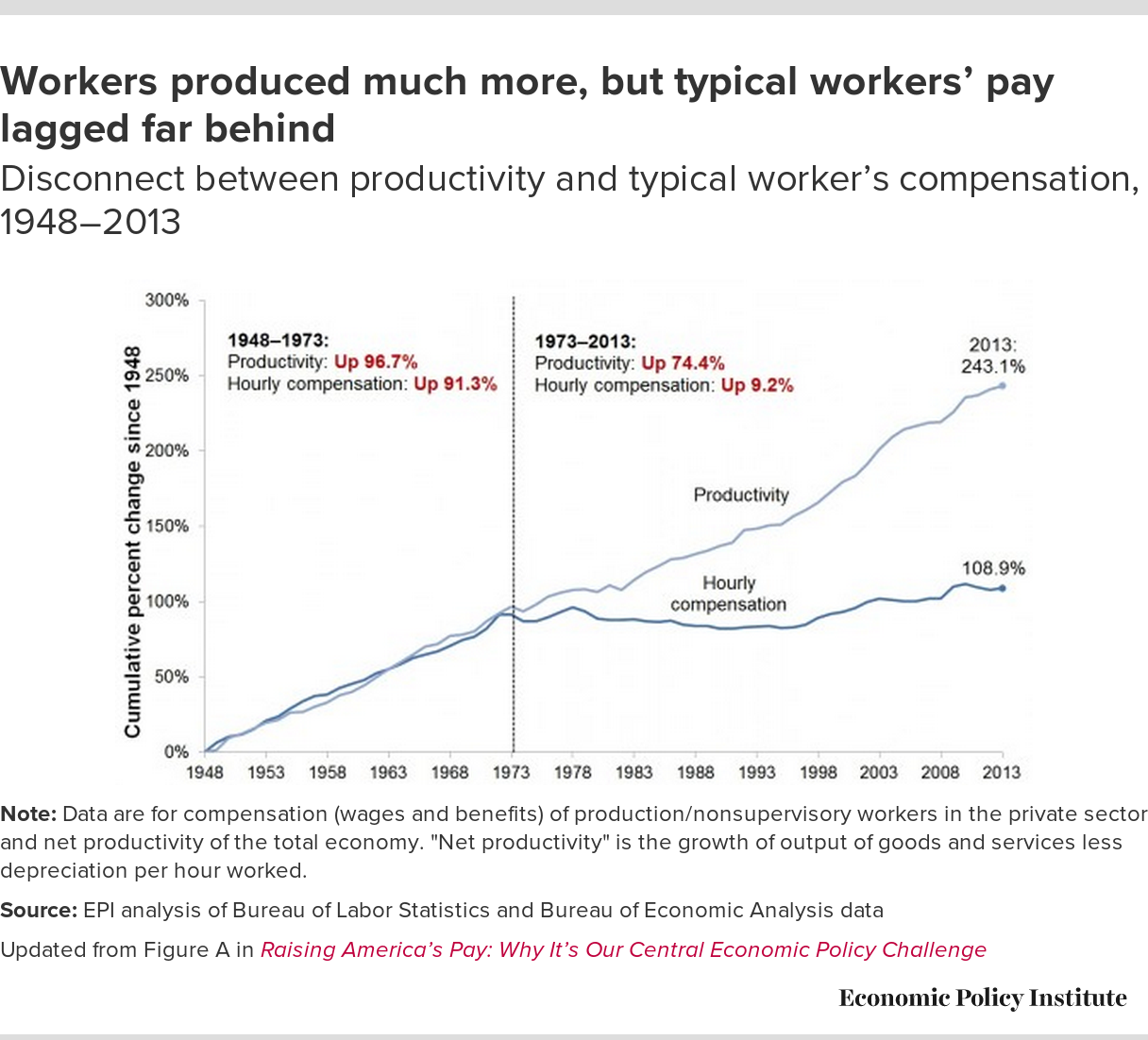
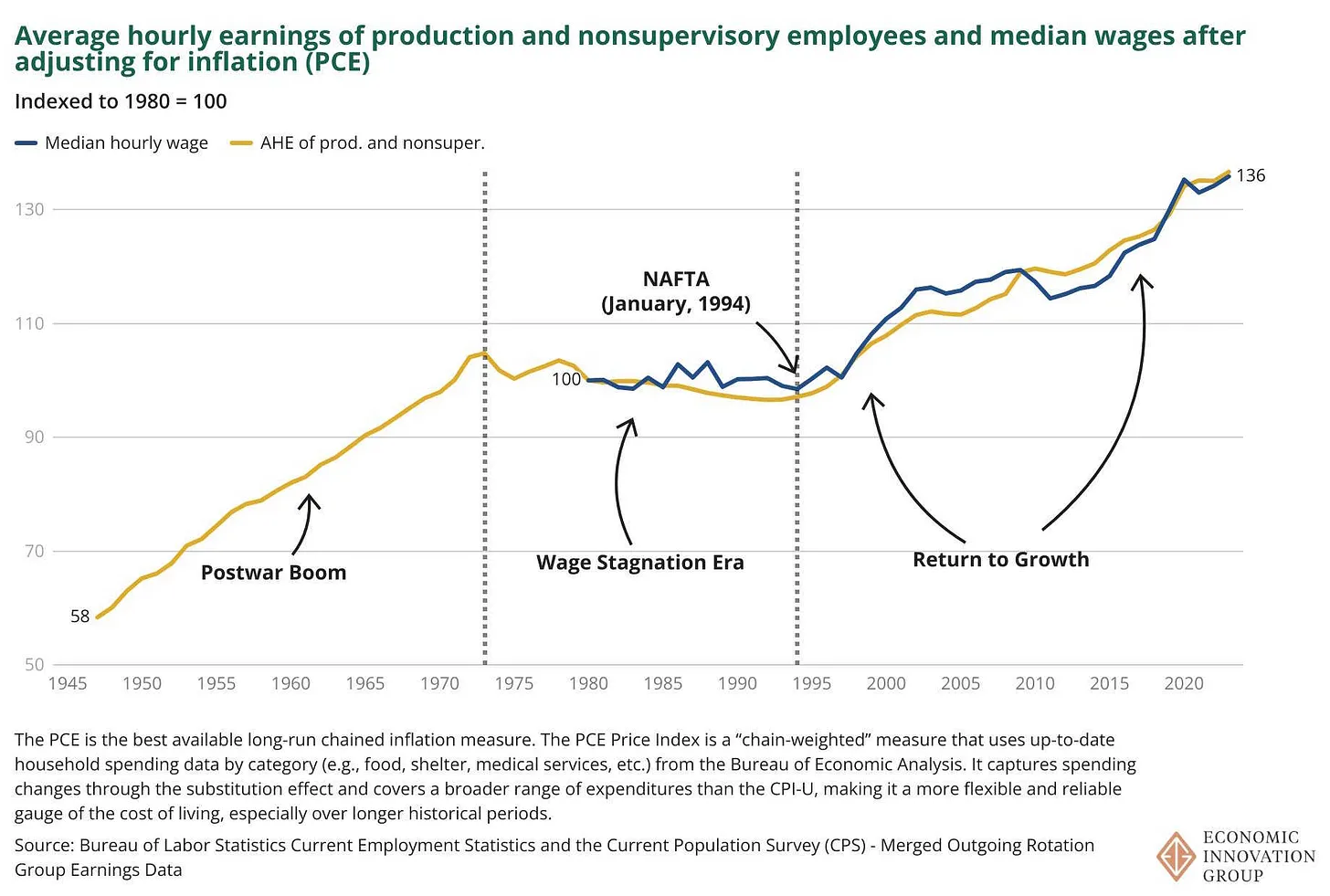
The fed treats wage growth as a leading indicator inflation -- even though anyone with a brain knows that wages are the last thing to go up in an economic cycle, so if it's anything it must be a trailing indicator -- so when wages start to rise up the fed responds by increasing interest rates. Raising interest rates kills wage growth, as intended.
tl;dr: slam the economy every time wages start to go up for 20 years -> "why haven't wages gone up in 20 years" surprise pikachu face