It would be nice to have a new Council, an ecumenical one, coming to agreement to unite Catholic, Orthodox, and as many mainline protestant churches as possible. It may require the Catholic church to make some sort of concession, which is probably the biggest obstacle.
There is no question that not everyone could or would want to unite. But some progress would be nice. To take a historical example the Council of Chalcedon did result in a schism (Oriental Orthodox I think), yet even so, more Christians came out of that Council united than were united prior to it.
Extremely unlikely, as there are a lot of theological dealbreakers: the Catholic veneration of Mary & the saints, Protestant sola scriptura & sola fide, Catholic papal infallibility, among many others.
Many Catholics believe that Mary was born without sin (immaculate conception), never died (assumption into heaven), can advocate to Jesus for believers (intercession) and has been crowned the Queen of Heaven. This goes well beyond "admiring" or "honoring". To complicate matters, many of these dogmas were only formalized by the Catholic church in the past 200 years. Quite a hard sell for the "sola scriptura" contingent.
> To complicate matters, many of these dogmas were only formalized by the Catholic church in the past 200 years. Quite a hard sell for the "sola scriptura" contingent.
There are only four things on that list, and only two of them are dogmas (and there are a whole two more Marian dogmas that aren’t on your list), so I am not sure where the “many of these dogmas” comes from; also, the various Protestant positions on the role of scripture (prima scriptura, sola scriptura, and nuda scriptura, in ascending order of how far they differ from the Catholic [or, for that matter, Eastern Orthodox] position) were themselves formalized not much less recently.
> Many Catholics believe that Mary was born without sin (immaculate conception), never died (assumption into heaven), can advocate to Jesus for believers (intercession) and has been crowned the Queen of Heaven.
So do the Orthodox churches. And both have roots going back way longer that 'just' two hundred years:
> Mary as Queen of Heaven is praised in the Salve Regina ("Hail Queen"), which is sung in the time from Trinity Sunday until the Saturday before the first Sunday of Advent. It is attributed to a German Benedictine monk, Hermann of Reichenau (1013–1054). Traditionally it has been sung in Latin, though many translations exist. In the Middle Ages, Salve Regina offices were held every Saturday.[21]
> "Majestic and Heavenly Maid, Lady, Queen, protect and keep me under your wing lest Satan the sower of destruction glory over me, lest my wicked foe be victorious against me." St. Ephrem the Syrian (4th Century)
Regarding "real presence", and speaking only for myself as a Christian who doesn't believe this -- my attitude to this is similar to my attitude to disagreements on creation in 6 days vs 6 eras, disagreements over where the end-of-times millennium will fall in the overall sequence of events of Christ's return, and disagreements on how or whether to celebrate Christmas.
For all of these topics I have a belief, and I'll argue it happily, but I also know that none of these are central to salvation. I'm not so sure about Mariology, which seems to veer dangerously close to idolatry and appears to cloud Jesus' central (and exclusive) role in salvation.
The differences between East and Rome are very substantive in my mind. The Holy Spirit operates in the Church differently (decentralized vs centralized), and they experience God differently (directly vs indirectly), and they even shape the Trinity differently, not to mention preservation vs development of doctrine.
To me, this means they differ on major categories: corporate, individual, divine, and temporal.
Lay members of these various churches certainly seem to believe there are huge theological differences, which they infer from the differences in day-to-day practices. But if you read the views of most of the high-level clergy and theologians in all these churches (and not the fringe, e.g. not the monks on Mt. Athos, or bishops trying to score political points), the differences are incredibly thin and not at all significant when comparing Catholic, Orthodox, Oriental, and Syrian churches to other Christian denominations. The patriarchs of all these churches in particular have been remarkably careful across the centuries, and especially today, to avoid formally committing their churches to views that necessarily prevent union. To be sure there have been many exceptions, but invariably succeeding patriarchs walk them back, it just takes centuries. I get the sense that at any particular time most patriarchs have been amenable to union and willing to make the necessary compromises demanded of the day, but fear conservative factions splitting away, which would be particularly painful for Orthodox and Syrian churches already beset by fragmentation nominally justified by much more minor issues (e.g. Julian calendar).
The biggest sticking points theologically today, from what I gather, arise primarily from 19th century Catholic pronouncements regarding papal infallibility and Mary, specifically the Immaculate Conception and how it relates to Original Sin. Most of the historical disputes (e.g. re miaphysitism, theotokos, unleavened bread, purgatory) have largely fallen away as misunderstandings.
In the case of papal infallibility, all ancient churches admit that the Rome pontiff held supremacy, but there was never agreement on precisely what that meant. The Catholic articulation of papal infallibility offends the synodal view of how doctrine is established, and while many Catholic theologians, including several popes throughout the 20th and 21st century, have publicly explained that popes can only legitimately pronounce what the church, synodally, has already accepted, the precise language used in the formal dogmatic pronouncement is too strictly worded. And it doesn't help that many fringe conservative Catholic theologians are more pro-pope than any pope since the the 19th century and promote this more extreme interpretation.
In the case of the Immaculate Conception, it's not so much that the Catholic view is unacceptable to Orthodox or Orientals, but that the Catholic doctrine is too specific (similar to infallibility) and excludes their alternative framing that beforehand had been understood not to be incompatible with union. Some (all?) the Syrians (Churches of the East), though, seem to accept it, despite not having a tradition rooted in the Augustinian articulation of original sin. And views of the Immaculate Conception among Orthodox and Oriental churches nominally in union with each other differ. (But to be clear, the differences are extremely technical; to most people, including Protestants and especially non-Christians, the varying views of all these churches would be indistinguishable, and theologians themselves often seem to articulate them wrongly, at least compared to how their patriarchs do.)
The Filioque also isn't a theological barrier. The way it's formally understood in Catholicism is not in conflict with accepted Orthodox or Oriental theology, but for various reasons Orthodox see it as an offense to synodality and respect for previous councils' compromises about how far to go in textually articulating the Trinity. I would think most Orthodox theologians see themselves closer theologically to the Oriental churches, but Oriental churches have changed the creed in much more significant ways--IIRC, the Armenian Church added whole new paragraphs. Not that Orthodox theologians are any more willing to overlook these changes, but they certainly don't make much hay about them.
Note that one of the ancient Syrian churches (I always get their names confused) is poised to reunite with the Catholic church. All the doctrinal stuff has long been ironed out, which took about a century, IIRC, from the beginning of earnest dialogue. The sticking point relates to the Catholic church demanding the Syrian church replace their organically evolved clerical disciplines and practices with comprehensive written canonical rules similar to the Catholic church (Latin and Eastern). In truth, the division between the Catholic, Orthodox, Oriental, and Syrian churches have always been primarily cultural (lay) and political (clerical), not theological. The theological differences have tended to be exaggerated on all sides in service of political (clerical, state, and social) machinations. The 19th century Catholic dogmatic pronouncements were largely triggered by political and social revolutions in Europe which caused turmoil among Catholics, with subsequent political and cultural backlashes that resulted in the peculiar theological focus that unfolded and overwhelmed the typical ecumenical circumspection of church leaders.)
Theological differences among churches nominally in union with each other are often arguably no less significant than between churches where union is supposedly not possible. And there has often been de facto union. For example, for several periods throughout the centuries the Orthodox and Oriental churches in Egypt de facto placed their churches under the authority of the rival patriarch while they weathered political winds and suppressions, without the feared theological contamination divisive theologians claimed were inevitable, and despite the claimed differences being deemed much greater and more incompatible than they're believed to be today.
I lived with someone who was a Greek Orthodox monk (has a PhD in philosophy and masters in theology) and this is exactly what he says. The actual theological differences are 2 or 3 very specific technicalities that are basically glossed over at the lay level (overshadowed by the cultural/political as you say). Thanks for the great articulation of this stuff.
What do you mean, the longer we wait and try? Ecumenical councils have always been held between communities that already viewed themselves in full communion, though dissaatisfaction with the results sometimes meant a council was the end point of that belief.
There are ongoing efforts to move back to full communion between the various churches via bi- and multi-lateral dialogue, its not something that people are waiting to try.
There is a lot less. I wouldn't say there is none. Not sure how old you are but many of us can remember the conflict in Northern Ireland. And today, one might look at the way the Ukrainian Orthodox Church has been treated in the Russia-Ukraine War.
I don't think I'd call either of those sectarian violence. There's certainly a religious flavor to the Troubles, but I see it as primarily an anti-colonial struggle.
But consider how each sect defines unity and the criterion for uniting to others. In my mind, to simplify:
    Evangelicals: we must agree to a common *subset* of beliefs
    Catholics: we must agree to allow contradictory belief systems under the primacy of a single “politically” unifying belief
    Orthodox: we must agree to unite under one belief system
The Catholics' willingness tolerating diverse beliefs under a single universal shepherd is key. A return to conciliarism (vs. a single pope), which was already the political system in the Catholic Church historically, at least for a time, could be one path to greater unity. Gets around Protestants' reticence to submit to the Pope and sidesteps the issue of papal infallibility.
Every religion in existence has multiple and often contradictory interpretations of doctrine and what is and isn't "canon." Why should Christianity be any different?
At least Catholics recognize Protestants and Orthodox as fellow Christians and aren't burning them at the stake for heresy anymore. That's probably the best we can hope for.
A lot of evangelical christians (like the predominant factions in the southern US) are very suspicious of Catholicism and many don't view it as true Christianity.
Of course. My comment was just describing a very common view in the southern United States. Not all Protestants believe that (especially Anglicans which are basically Catholic without the Pope), but it's something I heard a lot growing up.
I didn't say I agreed with it, but I think it's important to mention when some comments on here are suggesting a unification can happen. As someone extremely familiar with both groups, they may share most of the Bible in common as well as some core beliefs, but there other core beliefs that are hugely important and different between the groups that can never be reconciled. One important aspect is that Catholics (and I think Greek Orthodox) believe that the bread and wine literally become the body and blood of Jesus Christ during mass.
> It would be nice to have a new Council, an ecumenical one, coming to agreement to unite Catholic, Orthodox, and as many mainline protestant churches as possible. It may require the Catholic church to make some sort of concession, which is probably the biggest obstacle.
It was the Protestantism that splintered from the Catholic Church (and then splintered with-in itself), and changed doctrine(s) to what had been accepted for over a thousand years.
For example: the Real Presence. It's been accepted since the earliest times, and both Eastern (Orthodox) and Western (Catholic) Christianity profess it. Are Protestants going to accept it.
> The idea that these marvels of artistry were painted like my 10th birthday at the local paint-your-own-pottery store always seemed incongruous, at best.
Sure, but medieval European art generally sucked. (Call this a hypothesis if that helps.)
Compare the damn cave paintings of buffalo to most medieval European art. Some of the 10k-year-old stuff is much better observed. Europeans between about 500 and 1300 mostly couldn't paint. I'm sorry about that.
It's just not always taste. Sometimes it's taste. Sometimes people are bad at making art.
I think that the medieval art article is making a different point. The art there had a style that was dictated by its purpose and the beliefs of the artists.
For example, most of the examples given in that article are illustrations from manuscripts. This was something (as far as I know) that was new in the western world. The idea that books should be illustrated. And being before the printing press was introduced, each illustration (of which there were often many per page) was hand made. This added a substantial amount of time to an already labor-intensive process. And each image was not intended to be a standalone work of art.
Also, some of the other examples are of iconography. That style remains, largely unchanged to this day. If you do an image search for "religious iconography", you will see plenty of examples of sacred art that are not visually realistic but are meant to be metaphorically or spiritually realistic.
Sure, but for me the standard isn't whether it's visually realistic. Plenty of good stuff isn't particularly realistic. Traditional Chinese landscapes aren't realistic, but a lot of them are great. David Hockney has a lot of good work that isn't realistic and uses primitive-looking technique. The standard is not realism or which style was used. The standard, for me, is whether the artist was any good at art. Hockney is. (Usually.)
I'm not particularly basing my opinion on the examples in this article. It's easy to see that a lot of surviving European medieval art sucks. Maybe "surviving" is the problem. Maybe the good stuff got all smokey from being displayed and only the leftovers and student paintings, in storage, have survived.
On illustrations, everybody can see the difference between Durer and most medieval stuff. It's not simply style or taste.
So, just to make it clear… you define good art by “whether the artist is any good at art”.
Illuminating…
——
For anyone who’s interested in a slightly more nuanced take on how people in the Middle Ages perceived of “art” — and how different that notion was to how we perceive it today — Forgery, Replica, Fiction by Christopher Wood [1] is a really interesting read.
Here’s the last sentence of the Goodreads summary, which describes the major transition in thinking:
“… Ultimately, as forged replicas lost their value as historical evidence, they found a new identity as the intentionally fictional image-making we have come to understand as art.”
Mmm both of those are from 1400s and OP do limit it to 1300. And that 1300 limit is for good reason. Renaissance is usually dated after 1453 and that's when European art quality exploded. So yeah, those examples instead prove OP's statement.
If you want to nitpick, I can point out that the full quote is "Europeans between about 500 and 1300 mostly couldn't paint"; stress on "about", and those aren't paintings.
Besides the comment started by saying that "medieval European art generally sucked", so it covers the work I mention.
That's if you want to nitpick. If you don't, both those works are hallmarks of medieval art and while they're not necessarily exemplars, it is important to remember that there were still artists who knew their stuff in and out in medieval times and the Renaissance didn't come out of nowhere.
Edit: I travel through Europe by train a lot (mainly France and Italy but also Switzerland and Germany occasionally) and I visit museums, cathedrals, and art galleries in every city I stay. I have seen a lot of medieval art because those places just seem to have it lying around by the bucketload. There is a broad range in quality, but I have seen some very high quality woodcuts and, indeed, paintings, although those tend to be religious icons. Sculptures also, but mainly in statues of saints on the outside of cathedrals (see e.g. the Rouen cathedral). I'm trying to say that I'm not some kind of art authority or expert on medieval art, but I have seen my fair share of it, and no, Europeans didn't just suck at art in the medieval. I think what happened is there was a lot of mostly religious art that was lower quality, sort of like you can find plenty of slop on the internet today, but there were still skilled artists that created shockingly good art. You'd be more likely to find it in the palaces of the rich and powerful, I reckon, because they were the ones who could afford/support talented artists, as opposed to more ordinary craftsmen, who would be paid less. For the same reason you might find less of the good art lying around than the rougher, cruder kind, because the former was more expensive and thus harder to obtain. This also goes for religious art, which tended to include a smorgasboard of art forms, from painted icons and sculptures to reliquaries and liturgical equipment like communion chalices. But good medieval art existed, I've seen it, and it wasn't that rare.
And if we move the cut-off all the way to 1450, fuhgeddaboudit. You have freaking Albrecht D\:urer by that time. No fair. I'm sorry. The challenge concerned a particular 800-year period, which I chose carefully.
Yes I hear you about the range of quality. You're right. Many of the best pieces may have been "exhibited to death." There was presumably lots of student art and whatnot, probably not considered very good at the time, but it happened to survive. I accept that. But I'm only asking for a single counterexample in an 800-year block of time. I think that's fair.
If you like, though, I'm happy to amend my claim to this: "No, medieval European art did not suck. European art between 500 and 1300 sucked. But from 1300 until whenever the Renaissance starts, watch out. Those folks did some really nice work."
Well then that's not nitpicking, it's cherry-picking, trying to fit your claim into a specific but arbitrary period. You start by saying "medieval European art", then you reduce that to "between about 500 and 1300". Why between 500 and 1300 specifically? What happened to the other ~200 years?
It doesn't matter. There was plenty of good art between 500 and 1300 too. I mentioned the Rouen cathedral, whose west front, the one with all the statues of saints and the hyper-detailed architecture wikipedia tells me was "first built in the 12th century, entirely redone in the 13th century, and then totally redone again at the end of the 14th century, each time become more lavishly decorated" (https://en.wikipedia.org/wiki/Rouen_Cathedral#West_front). That's just one example that fits your spec, that I have personally visited. As I say I'm no expert.
Here's another: the sixth-century basilica of San Vitale in Ravenna, Italy, with some of the most famous mosaics ever, including those depicting emperor Justinian, his wife, empress Theodora, and his court, which again Wikipedia tells me were completed in 547.
With a cursory look online I can also find a bunch of other famous art pieces from your chosen period that I haven't seen myself, like e.g.the Diptych of the Virgin and Child Enthroned and the Crucifixion (https://www.artic.edu/artworks/16241/diptych-of-the-virgin-a...) which however is very typical of the ecclesiastical art I've seen in many museums and art galleries I've visited.
So I do think your claim is a bit exaggerated, even if you try to limit the time period carefully. There was always good art made in Europe.
Btw, I'm Greek so I'm not offended by your claim about Europeans, in case there was a lingering doubt about that. The Greek middle ages (i.e. Byzantium) are usually not included in the European middle ages but Byzantium produced absolutely gobsmacking art throughout the medieval so leaving it out is also a bit arbitrary (but that's not your fault).
The Rouen Cathedral is so impressive that I find it suspicious since there's nothing like it in that period. I think the "and then totally redone again at the end of the 14th century" (after 1300) carries the answer but I doubt I can find proof of what it looks like before that.
San Vitale is also so impressive that I think it heralds the end of that golden age. Nothing will be like this for 800 freaking years In contrast, that diptych from 1275 looks like it heralds the end of the dark age and it do looks like it (starting to be good but nothing like what'll come after it). So if we cherrypick again a little bit, 550-1250 is quite a long dark age.
Regardless of definition of "medieval" here, there still seems to be a very long contiguous era where there is dearth of good European, especially western/northern, art.
I won't bother getting into trying to demonstrate Medieval art doesn't "suck", it's not worth dignifying. But you should be aware you might be placing too much emphasis on painting and drawing specifically as opposed to other art forms.
Medieval art is very stylised, but the quality of the lines, the details in the clothes, the crispness of the composition, all that requires a lot of skill. Check out Jean Bondol’s work for instance https://artsandculture.google.com/asset/tapisserie-de-l-apoc...
You may not like the style, but being able to produce works like that requires you to be good at art on some level.
Ok, but the Honnecourt sketches are kind of strong. Not professional by today's standards, but decent. I'd be happy to have done them--but I'm not an artist. The tapestry can be appreciated, like Klimt's 2-D-ish stuff can be appreciated. The style is fine. It's not fantastic work, I wouldn't hang it up, but it's reasonably accomplished.
In general, though, yes, I think medieval European artists were short on skill compared to artists from Europe in pre-medieval and post-medieval times, and art from other places between ~500 and ~1300. They had some skill, but not as much.
Artists with limited technique are a real thing. Not everything is taste or style.
The clothing does often look good. In folio 16v ( https://www.medievalists.net/wp-content/uploads/2024/12/Vill... ), it's been overdone and appears to be far wrinklier than fabric could support, suggesting that Jesus is embedded in some kind of strange plant.
The faces are terrible in all cases.
In general, perspective is off, anatomy is off, and you get shown things that aren't physically possible.
The Honnecourt illustrations strongly suggest that (a) photorealism is the goal, but (b) Honnecourt doesn't know how to draw it. He does things like place a person's right eye at a different angle to the rest of the face than the left eye has. But hey, how likely is it that viewers will notice a malformed human face?
What do you mean by “exceptions”? Who are we, in our own infinitesimal slice of human history, to judge historic taste in art? And is naturalism the be-all, end-all of good taste? If so, we need to throw out the majority of art in the 20th century.
This is a question for an art historian, not some anon on a tech forum. (For what it’s worth, I find Medieval and Renaissance art to be about equally tepid despite the difference in execution. And plenty of people non-ironically enjoy Medieval art despite its supposed deficiencies.)
Like I said, I find the majority of European art before 1800 or so to be fairly dull, so I can't really answer this question. The prevailing technique improved remarkably post-Renaissance, and that's enjoyable to an extent, but the same themes get repeated over and over and over again.
If you're looking for art with an impact, the iconography of Andrei Rublev (and other icon painters during this period) is still massively influential in the Russian Orthodox Church today. 600+ years of direct use and inspiration! The lack of naturalism is not a deficiency.
The problem is not a lack of naturalism, it's obvious mistakes in the way the naturalistic poses are attempted. Many of Rublev's icons have obvious mistakes in the way joints are painted, for example - but not all of them or the exact same thing; it's not a style, it's simply a limitation of his skills. Many later painters who were inspired by him have corrected this mistake, not sought to reproduce it.
Not to mention, Rublev lived at the end of the Medieval period, and well into the Renaissance - the period where painterly skill in Europe was revitalized.
Again, I’m not sure why it matters. Henri Rousseau couldn’t draw for shit and yet people adore his art. The represented idea and its aesthetic execution are what people mostly respond to, not how realistic a figure’s joints happen to be. (And FWIW, a large number of Renaissance painters clearly have no idea what a female body looks like.)
Yeah he's good, that's obvious. Klimt cribbed from Rublev I bet. Naturalism was never the topic. But note that Rublev didn't do much work between AD500 and AD1300. Because not born yet. This is precisely why I wrote down dates, and why I am insisting on counterexamples instead of vague generalities.
Your exposure to medieval art must be very limited. I have seen some very magnificent pieces of medieval art personally. And paintings are a small part of what falls under "medieval art". Include those in the category, please.
And there is another element to consider, which is the purpose of the art. Medieval art was not concerned so much with realism, but with the symbolic.
I wonder: do you think Byzantine icons "suck"? I suspect you do.
What would be the point? Any example given will be met with some snarky and ignorant remark. Veit Stoss's Krakow triptych? Gentile da Fabriano's "Adoration of the Magi"? Byzantine art, like Monreale Cathedral? The Christ Pantocrator icon from St. Catherine's Monastery? Romanesque and gothic cathedrals? Ornate illuminated manuscripts? Shall I continue? You don't have to like medieval art, but claiming it "sucks" is not only generalizing (your very accusation in this thread), but it is boorish and ignorant. You've already gotten more "discussion" out of this topic than you deserve.
I checked your first example. It's from 1423, well outside the time period 500-1300. If you have valid examples, including the other works you mentioned above, please provide dates. I'm a little tired of doing that for people.
Go read the Book of the Games from the 1200's and now you'll learn something. The Middle ages were centuries wide. The last centuries had nothing to do, say, with the 5th century.
> The Renaissance is really the tail end of the Middle Ages historically
And the Space Age is really the tail end of the Steam Age. Human history doesn't have any sharp divisors, aside from total genocides or the even rare natural disasters on the scale of Pompeii's demise.
The admittedly artificial definition of the start of the Renaissance, however, does help frame an explosive growth of useful new tools in art (and other endeavors), like perspective, oil paints, and so on.
Obviously, there is no sharp line. That is too trivial to mention. But the distinction is made, because it captures something about the characteristic spirit of an age.
In the received black legends of whig history, the Renaissance is typically presented as some kind of enlightened rift with and rebellion against the supposedly dark and evil Middle Ages, but in some sense, it is more accurate to view it as a culmination of the Middle Ages or something continuous with it.
You will find great rifts later on with the rise of modernism.
The medieval period is different from the classical period. There's no reason to compare to medieval art when we have other examples of classical art that we can compare to.
Those are a few examples of weird art from hundreds of years of examples, but even then, those aren't super unskilled paintings. Medieval artists still used shading.
"Written By Angelika Semynina"
She writes exactly what we're taught in Russian universities; it's a textbook, almost word for word. Apparently, she's simply repeating the words of her teachers. I haven't seen anything like it anywhere else, and it comes not from professional art scholars, but from "philosophers." So I consider it more a form of coping than the result of scientific research. I have two Russian degrees, one in cultural studies and one in philosophy, and this is just my opinion.
Medieval art isn't comparable to a 10 year old's paint by numbers kit either. As seen in your link, they understood how to use shading for light and shadow for example.
You know what's crazy too is that in colonial America all the brick buildings you see in Boston, etc were also all painted? Well, limewashed technically. You never would have left a bare brick facade. You would put 10-20 coats of thin whitewash on it, or if you wanted it to look like raw brick you would tint the limewash red, and then go in and touch up the mortar lines trompe l'oeil style with white.
Bare brick as an aesthetic choice did not emerge until the late 19th century.
Did the limewashing impart some kind of protection to the masonry? I know water infiltration and freeze/thaw cycles, particularly with soft brick, can wreck masonry.
I asked my agent to rewrite this in a more traditional style, if it's helpful to anyone:
A defining experience of our age is a paradoxical hunger: we crave more even when we have an excess, and we crave less while more accumulates around us. It is a vague hunger we often can’t articulate, a deep sense of wanting something fundamental. This is the essence of "thin desire": a craving for something undefinable and ultimately unattainable, from a source with no interest in providing it.
The distinction between "thick" and "thin" desires is simple: a thick desire is one that changes you in the process of pursuing it, while a thin desire does not. Consider the desire to understand calculus versus the desire to check your notifications. The desire to learn calculus is thick; it transforms the learner, revealing new patterns in the world and expanding their capacity to care about new things. The desire to check notifications is thin; afterward, you are the same person you were five minutes before. A thick desire transforms its host; a thin desire merely reproduces itself.
The business model of most modern consumer technology is to exploit this distinction. It identifies a thick human desire, isolates the part that produces a neurological reward, and then delivers that sensation without the enriching substance. Social media offers the feeling of connection without the obligations of friendship. Pornography provides sexual satisfaction without the vulnerability of partnership. Productivity apps can give a sense of accomplishment without anything of substance being accomplished.
This thin version of desire is easier to deliver at scale, easier to monetize, and far easier to make addictive, resulting in a cultural diet of pure sensation. Yet, despite getting what we want with such efficiency, we are not happier. Surveys consistently show rising anxiety, depression, and loneliness. Perhaps we have become so proficient at giving people what they want that we have prevented them from wanting anything truly worthwhile.
Thick desires are inherently inconvenient. They cannot be satisfied on demand and often take years to cultivate. Mastering a craft, reading a book slowly, or becoming part of a genuine community requires sustained effort. These pursuits embed us in webs of obligation and make us dependent on specific people and places—all of which is pure inefficiency from the perspective of a frictionless global marketplace.
As a result, the infrastructure for thick desires—workshops, apprenticeships, local congregations, front porches—has been gradually dismantled. In its place, the infrastructure for thin desires has become inescapable, residing in the pocket of nearly every person. Grand programs to "rebuild community" often fail because they try to apply the same logic of scale they hope to escape. The thick life, however, doesn't scale. That is the entire point.
The antidote, therefore, may not lie in large-scale movements but in small, deliberate, and beautifully inefficient acts. Bake bread; the yeast is indifferent to your schedule, and the process teaches a patience that the attention economy has stripped away. Write a physical letter and send it through the mail; it creates a connection that exists outside the logic of engagement metrics. Code a software tool for just one person; building something that will never be monetized is a beautiful heresy against the assumption that all creations must serve millions.
These individual acts will not reverse the great thinning of our culture. But the thick life is worth pursuing anyway, on its own terms. The person who bakes bread isn't trying to fix the world; they are simply trying to spend an afternoon in a way that doesn’t leave them feeling emptied out. They are remembering, one small act at a time, what it feels like to want something that is actually worth wanting.
To put it politely, nobody gives two shits about what "your agent" said, in case you were wondering why this was downvoted to hell. This reply adds nothing to the conversation, and it also doesn't take a mastermind to figure they, too, can paste the post in ChatGPT and get a summary out of it. Also, reading a summary instead of the sources butchers the post entirely.
Hopefully you'll spare us the spam next time. Have a good day!
The shift is based on the argument that because the Communications Act of 1934 does not contain explicit for-cause removal protections for commissioners (unlike the laws creating the FTC, NRLB, FERC or others, which do), they are legally removable at will by the president, placing the agency under executive control.
The FCC has often been called an independent agency. But this may be a mistaken assumption. The 1935 Supreme Court ruling in Humphrey’s Executor held that when Congress included for-cause language, the president could not fire commissioners for simple policy disagreements. The FCC charter does not have that.
Under this interpretation, the FCC is considered part of the executive branch and aligned with the president's policy objectives rather than operating as an autonomous body
He (the president) shall have Power, by and with the Advice and Consent of the Senate, to make Treaties, provided two thirds of the Senators present concur; and he shall nominate, and by and with the Advice and Consent of the Senate, shall appoint Ambassadors, other public Ministers and Consuls, Judges of the supreme Court, and all other Officers of the United States, whose Appointments are not herein otherwise provided for, and which shall be established by Law: but the Congress may by Law vest the Appointment of such inferior Officers, as they think proper, in the President alone, in the Courts of Law, or in the Heads of Departments.
So the president can appoint various officials, but the Senate must, by majority vote, confirm the ones that Congress hasn't designated as not requiring confirmation.
On the removal side, there's this:
The President, Vice President and all civil Officers of the United States, shall be removed from Office on Impeachment for, and Conviction of, Treason, Bribery, or other high Crimes and Misdemeanors.
Note "all civil Officers of the United States". Any government employee can be impeached. A few judges have been impeached and convicted over the last 200 years.
That's all the Constitution says.
Cabinet members and some other high officials serve "at the pleasure of the President", and Congress has delegated authority for lower level civil servants to the executive branch and the Merit System Protection Board.
So the question for the various semi-independent boards and commissions is whether the president can remove them, or whether they need to be impeached to be removed. This is a real question where the members have a term of office set by law. Federal Trade Commission members have a 7-year term. Security and Exchange Commission members, 5 years. Federal Reserve commissioners, 14 years. Arguably, they should serve out their term unless impeached. The constitutional argument is that the executive branch has only enumerated powers, those listed in the Constitution. Since the constitution specifies both appointment and removal by impeachment, that covers the only ways such officers can enter office or be removed from it unless Congress provides otherwise.
You are making an argument for strict enumeration, in other words that officers can only be removed via impeachment because it is the only removal method explicitly listed in the Constitution. That argument was formally rejected by SCOTUS in 1926[1], and really only in force for lifetime appointment judges today.
I'm far from being versed in this, but when I read the wikipedia article, it's about whether CONGRESS can dismiss someone without approval of the president, not the other way around.
Myers addressed a law requiring Senate approval for a removal. The court struck down this law, leading the case to be considered a definitive rejection of strict enumeration. You can read more here- https://constitutionallawreporter.com/2019/05/09/myers-v-uni...
It's not a dream and hasn't been for decades. It's more a problem now because the federal government as a whole has gotten so powerful. Returning power to the states is one alternative.
At this point I think we can clearly see that the interpretation of our laws is extremely partisan at the moment, to the point that what exact text says is basically irrelevant. The broader issue here is a massive, completely unchecked, power grab that is -deeply- troubling. Our checks and balances, are failing us and this is another sign of their deterioration.
> I think we can clearly see that the interpretation of our laws is extremely partisan at the moment, to the point that what exact text says is basically irrelevant
By “at the moment,” you mean “in the 1930s when the Supreme Court bent over backward to uphold FDD’s administrative state, right?” When they effectively overruled the Supreme Court’s 1926 decision in Myers v. United States, right?
Because the text of the constitution says this: “The executive Power shall be vested in a President of the United States of America.” Show me how you get from that to executive agencies exercising executive power independent of the President.
Hamilton thought it was superfluous. Federalist 74 says:
> “The President may require the opinion in writing of the principal officer in each of the executive departments upon any subject relating to the duties of their respective offices.” This I consider as a mere redundancy in the plan; as the right for which it provides would result of itself from the office.
Note that this provision must be redundant even without a unitary executive. Because otherwise, the implication is the only thing the President can do with principal officers is to ask them for an opinion.
Some modern scholars think the provision, though functionally redundant, is there to address a dispute that arose during the debates about executive councils: https://www.yalejreg.com/nc/reconciling-the-unitary-executiv... (“Unsurprisingly, the issue of an executive council arose at the Philadelphia Convention. Several proposals to create a council of state or a privy council were offered. Some of the proposed councils would have provided advice to the President but would not have required that he follow it, whereas others might have required that he secure the consent of the council. But each of the proposals was rejected. Instead, the Convention took language from part of one of the executive council proposals – ‘he may require the written opinions of any one or more members” of the council – as a model for the Opinions Clause.’”).
So the clause is there not to describe what the principal officers must do, but what the President need not do. The President may but does not need to consult his principal officers before taking action.
> otherwise, the implication is the only thing the President can do with principal officers is to ask them for an opinion.
That's not at all the implication... how do you even reach that conclusion? The obvious implication is that the president can only do what he is legally permitted, which means he could do whatever Congress provides for in law, in addition to what's in the constitution. Because, you know, his job is to execute the law. And Congress and the constitution are the ones establishing the legal framework for agencies.
> This I consider as a mere redundancy in the plan; as the right for which it provides would result of itself from the office.
It's nice that Hamilton thought that, but what did those who wrote it think? It seems safe to assume they wrote it for a reason, not as fluff. Which brings us to...
> Some modern scholars think the provision, though functionally redundant, is there to address a dispute that arose during the debates about executive councils [...] the clause is there not to describe what the principal officers must do, but what the President need not do. The President may but does not need to consult his principal officers before taking action.
It's great some modern scholars think this, but this also isn't compelling. If that's what they wanted... they could and should have just said that directly, not left it as a historical puzzle for people to speculate about.
> That's not at all the implication... how do you even reach that conclusion? The obvious implication is that the president can only do what he is legally permitted, which means he could do whatever Congress provides for in law, in addition to what's in the constitution
The constitution doesn’t list any other supervisory powers the president has over officers. So if the Opinions Clause isn’t redundant, Congress needs to spell out all other supervisory authority, down to something as little as asking for opinions.
That reading isn’t just inconsistent with the unitary executive view, it’s inconsistent with every other common view of how the executive works. It would not only mean that Congress can create independent agencies, but that all cabinet officers are independent by default. Nobody seriously thinks that’s true, but that’s the implication of the non-redundant reading of the Opinions Clause.
It’s true that the framers probably didn’t put a redundant power in there just for funsies. But it’s also true that drafters don’t hide elephants in molehills. Article II only mentions executive officers in passing. It would be very odd if the drafters meant to invest them with tremendous independent power only by implication.
> It would not only mean that Congress can create independent agencies, but that all cabinet officers are independent by default. Nobody seriously thinks that’s true, but that’s the implication of the non-redundant reading of the Opinions Clause.
No. "By default"? That's a really weird way to make this sound crazy when it simply isn't. Congress is the branch that creates the departments and creates the legal framework around them in the first place. The president faithfully executes the law. That's not unserious, that's literally the point of the whole system.
A realistic Congress is, generally, not going to pass an act establishing an entire department and somehow neglect to prescribe how the heads are appointed and removed. (!) If it did that for some reason, then yeah, the heads would "by default" be independent, until/unless Congress prescribed otherwise in the future. And... so what? Either that'd be deliberate -- in which case it's equivalent to explicitly prescribing their independence, so it makes no difference unless your real belief is that Congress can't even prescribe this explicitly -- or it would be the result of hundreds of people simultaneously goofing, in which case they can just... fix it by passing another act. Or they deliberately wanted to sow chaos or play games by leaving this unclear, in which case... what else do you expect. In that case it's up to the voters to vote them out, or for courts to rule something if this silly hypothetical ever happens.
All of which is to say: "by default" basically means nothing here. It feels like a pointless argument with an agenda. The idea that the "by default" scenario somehow means some clause was superfluous and deliberately added for funsies is the unserious take here.
It does exercise executive power, otherwise it wouldn’t be constitutional. Only congress can make laws. When Congress delegates rulemaking authority to an agency, the agency makes rules pursuant to the executive power to execute the laws.
For example, Congress can ban “unfair competition.” But it can leave it to the executive agency charged with enforcing the law to define rules for exactly what constitutes unfair competition. That’s permissible because deciding exactly what’s unfair reasonably falls within the scope of enforcement discretion.
You may be right, but it may be more accurate to say checks and balances are shifting, not failing wholesale.
Judicial review of executive actions is stronger and more frequent than its ever been. Congressional power of the purse is secure. And the REINS Act (not yet passed) would require Congress to approve major agency rules before they take effect
In my reality, POTUS is doing everything he can to grind down Congress's power of the purse.
He's actively pressuring Fed policy, which at its most extreme gives the executive a blank check as it can force the Fed to purchase treasuries, filling the executive's coffers directly.
At the same time, they're arguing that pocket rescissions give them the right to avoid spending any individual dollar they do not wish to spend, even if Congress has allocated it.
Tell me what gives you confidence that the power of the purse is secure?
>In my reality, POTUS is doing everything he can to grind down Congress's power of the purse.
And it hasn't been working well. DOGE failed, SCOTUS has not yet issued a final determination on pocket rescissions, and the Fed can only buy treasuries on the secondary market, meaning the bond market is in control. There is also the debt ceiling which requires Congress to raise it.
DOGE didn't "fail" to maim the power of the purse. It actually achieved that goal. It failed to produce savings for taxpayers. Totally different.
SCOTUS "hasn't issued a final determination" on almost any issue put in front of it in Trump 2. Yet they consistently land on "the administration can do what it wants while we delay actually ruling, even if several lower courts have ruled against this outcome after actually hearing the case at length."
The Fed's prohibition from buying Treasuries directly is only relevant if the FOMC is actually independent. If it's not, nothing prevents POTUS from saying "the Fed will buy $x in treasuries at $y," directing them to do so, and creating a clear arb opportunity for all the intermediary banks to buy and re-sell their slice.
Sure, that'd trigger a financial crisis, but that's kind of the whole problem with idiot demagogues: they trigger such crises as a matter of course.
If a Democrat gets the presidency in 2028 do you think they'll restore the FCC's independence? I'd be willing to bet not, because no matter which party is in power, they are going to want to continue to concentrate that power.
Exactly why this is a terrible thing. It isn't liberal or conservative to say 'power accumulation in one person is bad'. We need to be actively stripping the executive, and any entrenched position, of power. Democracy needs decentralized power.
Yes, it seems as though a politically-aligned congress is ceding lots of its authority to the executive, while the SCOTUS is restraining the rest of the judiciary from checking the executive.
The shame of this is, it is in defiance of the design of the Founders, and will take a LONG time to correct, if we don't descent into authoritarianism before it is corrected.
Not really. Within the Court, the divide is primarily between originalists and pragmatists. This has been a fight going back a long time in legal theory. It had been dominated by pragmatists since the 1920s and the tide started to turn in the late 1980s. The current Court is dominated by originalists.
It has little to do with political parties even though originalist thought is more aligned with conservative social and political thinking and pragmatists are more aligned with progressive thinking.
That’s a good analysis. But the simpler route is that there is no such thing as an “independent” agency. That’s a 20th century creation. The constitution doesn’t even talk about an “executive branch.” It vests the executive power in a single office—the President. (“The executive Power shall be vested in a President of the United States of America”).
Can congress create a law that provides for congressional aides to exercise power “independent” of Congress members? No. Can Congress create a law that provides for judicial law clerks to exercise power “independent” of Article III judges? No. It’s an extremely easy question. Myers v. United States got the right answer almost 100 years ago.
> But the simpler route is that there is no such thing as an “independent” agency. That’s a 20th century creation.
Actually, there are at least three early examples of independent agencies, though note that until the modern administrative state emerged in the late 19th century the Federal government was never so hierarchically organized as to admit to an "agency" as we understand that term today.
First was the 1790 sinking fund, a nominally executive committee created by Congress to pay down the national debt, which could override the President's preference regarding payments. Second was the office of the comptroller, which was strongly shielded from executive control for fear of a corrupt president, and which (IIRC) was the subject of vigorous Congressional debates. These two examples are possibly at least partly why in a recent emergency docket decision there's dicta exclaiming that Federal Reserve independence was not and in decisions to come would not be implicated by what SCOTUS (impliedly) has coming down the pipeline. Both of these examples would later be construed as examples of "quasi-legislative" executive agencies, rooted in Congress' power of the purse. (Though, it's likely SCOTUS will lean more heavily on powers and precedent regarding banking.)
Third was the de facto independence of federal district attorneys. Until 1820 they were answerable to nobody, except in theory to Congress by impeachment, until Congress nominally placed them under the Treasury Secretary in 1820. This would be an original example of "quasi-judicial" executive officers, which one might naturally apply to modern administrative and immigration law courts.
There are more, albeit less clear-cut practices, including the situation in Marbury v Madison. Also note that the removal power is distinct from the broader contemporary unitary executive theory, which aims to place even more plenary power in the presidency than merely removal (which is just the hook to prove the larger theory by logical inference which otherwise has little, if any, historical precedent or positive textual evidence), and therein lies much more complexity, which is why the whole debate has been muddled from the very beginning of the US--the Founders and early Congresses discussed it explicitly, but largely showing there was in fact no consensus, except what they de facto established in practice (e.g. many of those who argued for a unitary executive-like theory in fact joined in the establishment of and acquiesced to the practices of a partially independent comptroller). I think the black letter law annunciated by Humphrey's Executor, that Congress can in principle shield quasi-legislative and quasi-judicial agencies from the president, is spot on when trying to square constitutional text, constitutional theory, historical debates, and historical practice. Though, there's a good argument that over time the courts have not been vigilant enough in cabining Humphrey's Executor, e.g. by more clearly and strictly articulating what qualifies as quasi-legislative and quasi-judicial functions, which is presumably why Robert's recently suggested, as an olive branch offering, that Humphrey's Executive as applied today does not hew closely to the legal principle it expounded (and presumably, were Roberts to continue, that it applied it's own principle wrongly). Personally, I wouldn't mind a forthcoming SCOTUS opinion that effectively expands removal powers by way of affirming and applying Humphrey's Executor legal rule, even if it nominally reversed it's application with the same set of facts.
There are scores of law review articles discussing the subject going back well over a century, but a really good one written not long after the Reagan-era debates is "The President and the Administration" by none other than Cass Sunstein and (apropos HN) Lawrence Lessig, https://chicagounbound.uchicago.edu/journal_articles/7779/
That article is the most honest review of the debate I've read; perhaps too honest and earnest because they really pull their punches. (Perhaps that's partly because of Lessig's background in legal history and his reluctance to make absolute declarations about historical matters? EDIT: I confused Lessig with Eben Moglen at the FSF) It gives significant attention to Myers, FWIW, including agreeing (IIRC) that it was correctly decided.
And if you haven't read this already, here's the contemporaneous strong-man argument for independent agencies, Christine Kexel Chabot, Is the Federal Reserve Constitutional? An Originalist Argument for Independent Agencies, 96 Notre Dame L. Rev. 1 (2020), https://scholarship.law.nd.edu/ndlr/vol96/iss1/1
>Can Congress create a law that provides for judicial law clerks to exercise power “independent” of Article III judges? No. It’s an extremely easy question. Myers v. United States got the right answer almost 100 years ago.
Article I courts arguably exercise judicial power independently of the Article III judges.
But if you want to go down the separation of powers route, you'll need to break up many federal agencies to separate their legislative and judicial functions from their executive duties. That was the basis of Humphreys Excecutor, which btw was decided by largely the same court as in Myers. Humphreys (and later in Morrison v Olson) recognized that federal agencies can in practice perform "quasi-legislative" and "quasi-judicial" functions, not just law enforcement duties. There is for example a body of law governing rulemaking by agencies. Even CJ Roberts observed during the oral arguments of Trump v Slaughter that an agency's functions might span all three categories of government power -- executive, legislative, judicial -- to various degrees.
If separation of powers is to prevent Congress from wielding executive power, it should likewise preclude a president from laying claim to the other categories of power.
They exercise adjudicatory powers that Congress could otherwise provide to be handled directly by the executive or private bills. When a case involves an actual Article III issue, Article I courts need to kick it over to an Article III tribunal: https://supreme.justia.com/cases/federal/us/564/462/
The terms “quasi-judicial” and “quasi-legislative” do not mean “judicial” and “legislative,” they mean “executive.” For example, the legal fiction allowing executive agencies to make rules is that those rules are simply structuring what they could do with executive authority anyway.
So separation of powers actually cuts in the opposite direction with respect to quasi-legislative and quasi-judicial powers. So when the SEC prosecutes you in front of an ALJ for violating an SEC rule, it isn’t actually exercising judicial or legislative powers. It’s just laying out those structures for what it could do through some guy making an executive decision. That’s the only reason the SEC is constitutional. Given that, Congress shouldn’t be able to limit the President’s supervision over what’s notionally an exercise of executive power.
P.S. Regarding the SEC, SEC v Jarkesy (2024) curtailed the use of ALJs by the SEC, holding that the SEC proceedings in question were basically like any other lawsuit so as to trigger the Constitutional protections afforded to defendants. If the Sup Ct goes down the unitary executive route, SEC v Jarkesy should be the first of many cases to challenge the structure of federal agencies.
The administrative law proceeding is a judicial proceeding. Its purpose is to determine whether someone has violated the rules created by the SEC. It's fundamentally no different than a court proceeding to determine whether someone has violated the criminal code. Both are trying to decide "were the rules broken, and if so, what should be the penalty?"
A fundamental principle in any legal system is that no one can be the judge in his own case. But if the ALJs and the SEC rulemakers are under the direct control of the president, then the president is effectively performing legislation, prosecution, and adjudication all at once. The president could keep sacking ALJs until he finds one willing to issue his favored ruling. That is precisely the kind of scenario that separation of powers seeks to avert.
> The administrative law proceeding is a judicial proceeding
It is structured like a judicial proceeding, but it is not a judicial proceeding in the sense that it doesn't exercise the "judicial power." For example, everyone agrees that determining violations of criminal laws is an exercise of judicial power. So the SEC cannot prosecute you in front of an ALJ and impose criminal penalties. SEC v. Jarkesy also held that the SEC cannot impose civil penalties in front of an ALJ: https://www.congress.gov/crs-product/LSB11229.
On the other hand, Congress can create a procedure in an executive agency that looks like a judicial proceeding, so long as it only does what an executive agency could do anyway. In Oil States, the Supreme Court held that the Patent Trial and Appeal board was constitutional, because patents were a "public right" that could be determined by the executive branch: https://www.supremecourt.gov/opinions/17pdf/16-712_87ad.pdf. A Patent Examiner can grant you a patent and can revoke an already-granted patent. That's an executive function. Back in 1790, Thomas Jefferson was doing that himself as Secretary of State. So Congress can create a court-like proceeding in the Patent Office to challenge a patent's validity, and that's fine because the result is something the executive branch could do anyway. It's not an exercise of the judicial power.
> But if the ALJs and the SEC rulemakers are under the direct control of the president, then the president is effectively performing legislation, prosecution, and adjudication all at once... That is precisely the kind of scenario that separation of powers seeks to avert.
Under your interpretation, the SEC is exercising legislative, executive, and adjudicatory powers all at once--regardless of how much supervisory authority the President has. You're correct that separation of powers seeks to avoid that. But the way it does not is not by creating agencies that exercise all those powers independent of the president. It does so by creating three branches of government, and requiring the executive, legislative, and judicial powers to be exercise by the respective branches. The problem you have identified is a problem with administrative agencies exercising legislative and judicial powers, not a problem with Presidential control over the executive branch.
Ironically enough, the administration is attempting to fire Lisa Cook from the Federal Reserve Board of Governors, despite the very clear existence of a 'for cause' clause, and has taken the matter to the Supreme court where it will be heard next month.
It's a little more complicated. The Supreme Court has already ruled that Trump can fire agency heads not for cause even when there is a "for cause" clause in the law. The Court then invented a new "the Federal Reserve is special" clause that prevents Trump from using that exact same power on Fed Governors. So because the Court has made a patchwork quilt out of the law (in an effort to bring about their preferred policy outcomes), Trump is now trying to muster "cause" against Cook. Early signs indicate that the case appears to have serious problems.
Even though The Supreme Court is still trying to keep up appearances, they are not working off of consistency at this point, so anything can still happen.
The current body of Supreme Court jurisprudence is extremely consistent in comparison to the mid-20th century when it ginned a 4th branch of government out of thin air and rights out of “emanations and penumbras.”
It's consistent in that it largely lets Trump do almost anything he wants without ever setting a binding precedent that will allow a Democratic president to do whatever he wants.
Incorrect. The Presidential immunity decision for example is why Texas can’t prosecute Biden for reckless endangerment for throwing the border wide open.
You're conveniently ignoring all the wild shadow docket decisions in Trump's favor with no provided justification. None of that sets a precedent.
There's also a giant bloody spectrum between 'policy that had a bad outcome for someone (hint: That's every policy)' and 'blatant pay-to-play corruption and criminality and treason' when it comes to that immunity. The court, of course, went all in on enabling the latter, instead of finding any kind of rational ground, because any rational ground would have put Trump in prison.
By failing to give any qualification of what the fuck an official act is, they've given him blanket immunity. And blanket immunity for an executive means that the constitution is as good as a piece of toilet paper. There are no consequences to him violating your rights.
There’s nothing unusual about the use of the shadow docket. It’s being used in response to district court orders that are being issued without trial and often with very short or no opinions. Why should the Supreme Court spend a year on the full rigmarole for some preliminary injunction a district court fired off after a week after no discovery, no trial, and minimal briefing?
> There's also a giant bloody spectrum between 'policy that had a bad outcome for someone (hint: That's every policy)
Yeah, that’s exactly why there’s presidential immunity for official acts! Because otherwise you could easily shoehorn one of those bad outcomes into the letter of some broadly written criminal law.
In Texas, there’s a deadly conduct crime: “A person commits an offense if he recklessly engages in conduct that places another in imminent danger of serious bodily injury.”
You think some Texas prosecutor couldn’t get a border county Texas jury to squint at that text and convict Biden under it for throwing open the border to illegal aliens? All the Supreme Court decided was that some things the President does can’t be prosecuted under the criminal laws like he’s an ordinary citizen. That’s obviously true, which is the same reason Congress has immunity for official acts and judges have immunity for official acts.
> By failing to give any qualification of what the fuck an official act is, they've given him blanket immunity.
No, it’s exactly the opposite. All they decided was that official acts immunity exists. You can’t prosecute Obama for involuntary manslaughter because some executive action he took got someone killed. They then remanded to the district court to decide what counted as official acts and what didn’t count. That didn’t give Trump “blanket immunity”—it left it to the district court to decide what was covered by the immunity and what wasn’t.
Yep, all 4 charges remained in the superseding indictment (filed Aug 27 in 2024 by Smith).
One of the problem is the "the DOJ's policy of not prosecuting sitting Presidents", while it's understandable it's definitely not great for the rule of law.
And the other is it took too many years for the whole shit shower to drip down. (Garland appointed Smith in November of 2022, and it took ~10 months for the indictment.)
Jack Smith also just fucked up the prosecution. The Supreme Court was going to find some sort of official acts immunity existed. There is implied official acts immunity for judges in the U.S. And official acts immunity for executives is typical in the developed world. The EU for example has official acts immunity for “officials and servants,” though the scope is fuzzy: https://www.politico.eu/article/eu-high-flyers-face-fresh-do....
Jack Smith’s indictment mixed together conduct, like the sitting President consulting with his AG about suspected voter fraud, that clearly would fall within the scope of immunity, with stuff that was clearly not an official act. I don’t know if he was dumb or arrogant, but it was an insane tactical error.
Official immunity is tough and there’s no clear answer. The old canard that “a prosecutor could indict a ham sandwich” has a lot of truth to it. As between a potentially criminal, but duly elected President, and a potentially corrupt, and unelected prosecutor, which one is the bigger risk? There’s a strong argument that it’s better to have elections be the final backstop rather than the judgment of unelected prosecutors being able to override voters.
Just wait until opposition candidates start getting disqualified for an unpaid parking ticket (while the incumbent had his fingers in a tank assault on the Duma, or three different election fraud conspiracies and one failed coup).
Andrew Johnson was impeached for removing Senate-approved officers. The trial failed. It's been the precedent since then that the President can terminate any and all presidentially-appointed officers, at any time, and for any reason. Sure, the SCOTUS has vascillated on this, but the courts now are being more clear now that this really is the case.
Presidential impeachments are political processes and so do not set precedent. At least, not any more than any other political process. So it's as much a precedent as McConnell's "no SCOTUS confirmations within the year before a presidential election" or Johnson's "congress members don't need to be seated in a timely manner" precedents.
It depends on whether you think elections are better than “independent civil servants.” The system the founders created was one where the executive branch would be subject to the whims of the people via regular elections of the President.
In the late 19th and early 20th century, folks like Woodrow Wilson came up with this idea of the administrative state run by independent expert civil servants: https://teachingamericanhistory.org/document/the-study-of-ad.... The concept arose from Wilson’s hatred of democracy and immigration:
> The bulk of mankind is rigidly unphilosophical, and nowadays the bulk of mankind votes. A truth must become not only plain but also commonplace before it will be seen by the people who go to their work very early in the morning; and not to act upon it must involve great and pinching inconveniences before these same people will make up their minds to act upon it.
> And where is this unphilosophical bulk of mankind more multifarious in its composition than in the United States? To know the public mind of this country, one must know the mind, not of Americans of the older stocks only, but also of Irishmen, of Germans, of Negroes. In order to get a footing for new doctrine, one must influence minds cast in every mold of race, minds inheriting every bias of environment, warped by the histories of a score of different nations, warmed or chilled, closed or expanded by almost every climate of the globe.
The idea of “independent agencies” staffed by neutral civil servants arises directly from this skepticism of democracy and voters.
The president they created was one who administered over a much more limited government, one that primarily collected taxes and waged wars. Both were done at the behest of congress, so there was limited independence in how it was done. In the interim, federal agencies with a far greater impact on people's daily lives were created, on the assumption that they could be run according to policies set out by congress, and hence not completely upend people's lives on the whim of a single partisan elected official.
> The president they created was one who administered over a much more limited government, one that primarily collected taxes and waged wars.
Even if that was relevant, it's not true. By the time of Thomas Jefferson's death in 1826, the federal government had over 10,000 employees. It didn't just collect taxes and wage wars--it issued patents, enforced laws, managed pensions (for soldiers), provided direct services to the public (mail), issued currency, and had a central bank. By 1900, still decades before the rise of the modern administrative state, the federal government had over 230,000 employees.
It is true and your own comment is a restatement of what I said. It's even obviously true, why would you pick a fight over this? You said "even if that was relevant" why not argue that instead?
> The idea of “independent agencies” staffed by neutral civil servants arises directly from this skepticism of democracy and voters
It arises from the need for certain aspects of our country to not be explicitly partisan or subject to fickle leadership. Same reason people call for independent committees to draw congressional maps.
This country is not and never has been a “true” democracy. Being inherently skeptical of the democratic process is foundational to our country.
There is no such thing as someone who is "independent" and not "partisan." The federal bureaucracy is neither--it is comprised of people who, just like everyone else, are motivated by their own ideology and self-interest. Insulating those people from the elected President doesn't make them non-partisan. It just prevents the electorate from replacing those people with members of whichever party is currently favored.
You're correct that the founders were skeptical of direct democracy, but their solution to that was representative government and constitutional protections for private property. The people don't get to decide what to do, but they do get to decide who gets to decide what to do.
”Don’t let perfect be the end of good.” I would say it’s pretty common sense that avoiding an explicitly partisan situation would generally lead to less partisan outcomes.
"Independent agencies don’t exist" is not a serious description of how U.S. statutes and doctrine work. "Independent agency" is not a vibes-based label. It's standard terminology for agencies Congress structures to be somewhat insulated from direct presidential control (e.g. multi-member commissions with fixed terms and (often) for-cause removal). Congress has, in fact, established a number of such agencies headed by multi-member bodies whose officers may only be removed by the President "for cause." [1]
The Constitution may not use the modern civics phrase "executive branch," but it plainly creates what we now call one: "The executive Power shall be vested in a President..." Even if we grant the semantic point, it doesn't prove the legal conclusion you want. Congress's authority to create agencies and offices and design their basic structures (subject to constitutional limits) is well-recognized. [2]
You're also wrong to treat Myers v. United States as if it ended the discussion. Myers involved a purely executive officer (a postmaster) and is part of a broader removal-power line of cases. [3] Humphrey’s Executor (1935) limited the sweep of Myers in the context of independent commissions by upholding Congress's ability to restrict removal of FTC commissioners to specified causes (e.g. "inefficiency, neglect of duty, or malfeasance in office"). [4]
Your analogy to "congressional aides" and "judicial law clerks" is a category error. Aides/clerks are staff whose authority flows through, and is controlled by, constitutional officers. Independent commissions are Congress-created offices exercising delegated statutory authority, and the question is how far Congress may structure that delegation (appointments, terms, partisan-balance requirements, and sometimes removal limits) consistent with separation of powers.
Finally, the Woodrow Wilson citation is doing sleight of hand. The passage you quote is about insulating administration from day-to-day politics ("administrative questions are not political questions") and it indeed contains elitist/racist language about voters. [5] But (1) that’s an argument about civil service/administration, not a dispositive argument about the constitutionality of independent commissions, and (2) it's historically confused to imply this is a late/progressive "invention": as early as 1887 Congress created the ICC with explicit bipartisan-balance language and explicit for-cause removal language. [6]
If you think Humphrey’s Executor was wrongly decided and should be overruled, that's an argument you can make. But pretending "independent agencies don't exist" (or that Myers settled everything) just isn't accurate as a description of U.S. law, and someone with your background and experience should know this.
That's always the question with this unitary executive business. They believe this is the government defined by the Constitution, regardless of precedent. Do they believe it is a good system of government? Do they believe this is the government intended or rather the government allowed by legal loophole, vagueness, or contradiction? Because it seems like they think the president should rule like a monarch because they happen to control the presidency at the current moment, not because it is a wise and effective system of government.
It's a fair question to ask "who are independent executive agency heads accountable to" in a constitutional context. It is true that the Executive Branch has grown far beyond what the Founding Fathers could have imagined, but the idea of a unitary executive is that the President is responsible and accountable for everything that happens in the Executive Branch. If the voters don't like what the Executive Branch is doing, they can replace the President in the next election. What happens if voters don't like what independent executive agencies are doing? There's no democratic recourse.
Think of a scenario where a President was elected with a large-ish majority and promised during the campaign to change broadband regulations to reduce broadband prices across the country. Unfortunately, the FCC commissioners were all appointed by the previous president and block this policy change that the voters clearly support. How does that square with democratic accountability?
The problem is that Congress has delegated a lot of its traditional law making power to the Executive Branch. Laws are written in vague ways with executive agencies given liberty to implement as they see fit. This gives a lot of additional power to the President (who can at least be dealt with by impeachment or being voted out in the next election) as well as independent executive agency heads (who can't be directly fired by anybody). I agree that Congress should be the ones passing laws as the excessive delegation of lawmaking by Congress is what's gotten us into the current situation
none of the authority Congress has delegated has been delegated irrevocably. if you want to change how the head of the FCC is appointed there's this thing called a law that can't be passed to change it
How can you cite “precedent” when Myers v. United States decided this issue in favor of the unitary executive back in 1926? The administrative state that exists today was only facilitated by the FDR Supreme Court overruling a bunch of precedents.
Go read the Federalist Papers. The founders thought very hard about who should exercise which powers and how they should be selected. They did not intend for 99% of the actual government operations to be run by “independent” executive officials that were insulated from elections. That’s something we made up in the 20th century in response to trendy ideas about “scientific government.”
The Federalist Papers is not "the founders". It's Alexander Hamilton and James Madison. There were numerous factions running around the Constitutional Convention, and they negotiated the final document together.
I don't understand why the Federalist Papers gets cited as if it were part of the Constitution. It is not a definitive source of anything except the opinion of those two (three, with Jay) men.
The Federalist Papers reflects the views of the majority faction of those who wrote the constitution. You can get the minority opinion in the Anti-Federalist papers.
But find me any contemporaneous document that suggests the framers thought power should be exercise by unelected bureaucrats insulated from oversight by elected officials.
>How can you cite “precedent” when Myers v. United States decided this issue in favor of the unitary executive back in 1926? The administrative state that exists today was only facilitated by the FDR Supreme Court overruling a bunch of precedents.
And in doing so they reshaped the precedent. One can't claim Brown v Board is not precedent just because Plessy v Ferguson already spoke on the same matter.
I’m responding to the OP’s criticism that proponents of the unitary view of the executive “believe this is the government defined by the Constitution, regardless of precedent.”
It seems odd to complain about giving insufficient respect to precedent, when that precedent itself overruled a prior precedent.
I agree precedents should be overruled when they are contrary to the text of the constitution, such as when Brown overruled Plessy. There are a lot of 20th century precedents that are wrong and are based more on convenience and a desire to appease FDR than on the text of the constitution.
> The founders thought very hard about who should exercise which powers and how they should be selected.
Which would be perfectly fine as a basis if we were still in the 18th century.
Things are, I believe, somewhat different now and what a bunch of rich old white men thought then isn't all that relevant now except as a historical oddity.
If you think what the founders said doesn’t matter because they’re dead white guys, isn’t that an argument for giving more power to the guy who won the election? Because surely the dead hand of the founders is the only thing that has the authority to overrule the elected President.
It has to be a dichotomy, right? You either go by what the constitution meant to those who wrote it, because that’s how written agreements work, or otherwise you go with what the mob wants. How can there be some third option?
No, why would it have to be a dichotomy? That doesn't make any sense.
For example, the Catholic Church is neither (solely) defined by a set of 2,000 year old writings, nor is it under strict authoritarian rule by the elected Pope. The Church has been gradually sculpted and steered by centuries of councils, disagreements and reconciliations, power struggles, competing institutions, and much more. It is its own thing, defined by precedent and history and nearly unrecognizable when compared across centuries.
The approach of the Catholic church is internally consistent, because it is premised on the existence of divine law which the church as an institution is specially entrusted with conveying to the laity.
That approach makes no sense in a secular democracy. There is no divine law to interpret, and there is no body like the Catholic church charged with mediating between divine law and the laity. The only source of authority is the consent of the governed. The constitution and amendments reflects the consent of a supermajority that can bind subsequent majorities. But any intermediate majority can be overruled by a subsequent majority. In that framework, the only sources of authority that can overrule the present majority are the edicts previously sanctioned by supermajorities. And the only relevant meaning of those edicts is what they would have meant to the people who consented to them.
If you dispense with the idea that the intent of the framers matters, then you’re dispensing with the authority of the supermajority that consented to what the framers wrote. That leaves only the present majority as the only source of authority.
The fact that you still call the "founders" the "founders" as if they were a single unified person/entity with non-conflicting values shows me what kind of "originalist" jurisprudence you go for.
The concept of independent agencies (that is, those overseen by Congress rather than the president) was controversial long before, and for far longer, than it wasn't.
It's not, really. In Seila Law v. CFPB (2020) the Supreme Court ruled that even directors seemingly protected by for-cause language (which the FCC charter does not have) can be removed at will unless the agency in question "exercises no part of the executive power" and is "an administrative body ... that performs ... specified duties as a legislative or as a judicial aid." https://en.wikipedia.org/wiki/Seila_Law_LLC_v._Consumer_Fina...
Do you have a case which was not about the executive authority of Donald Trump specifically? When we talk about how controversial or how new this interpretation is, the question I really have in mind is, why should I believe that it was developed out of genuine legal analysis and not an unprincipled desire to give Trump more power?
It contains an exhaustive historical analysis explaining why the President has unrestricted power to remove executive officers.
The “unprincipled” decisions were the ones like Humphrey’s Executor that sought to find ways to implement the 20th century concept of an “expert administrative state.” That’s not the government that was created in our constitution.
Yeah the FCC is really about Weiner[1], if anything, not Humphrey's. Weiner established some precedent of "inferred" independence for agencies of a certain character (e.g. those whose function is wholly judicial or legislative) even when explicit removal protections are not included in the law.
In 2020, five years ago, was essentially the exact same court as today, except KBJ replaced Breyer. The precedence in question dates to 1935 Humphrey's Executor v. United States where a conservative Supreme Court sought to cut back executive power of a liberal president. Now we have a conservative Supreme Court expanding executive power for a conservative president. If you think the Roberts court would have let Joe Biden have this much power well then I have a bridge and some student loans to sell you
Humphrey's, which held that for-cause protections are constitutional for agencies that meet certain tests, while broadly relevant to current events (FTC etc.), is not relevant to FCC as FCC charter does not have explicit for-cause protections.
> If you think the Roberts court would have let Joe Biden have this much power well then I have a bridge and some student loans to sell you
Yes, I do think the time horizon of every SCOTUS member is longer than four years. I believe Gorsuch when he says:
I appreciate that, but you also appreciate that we're writing a rule for the ages. -- https://www.supremecourt.gov/oral_arguments/argument_transcripts/2023/23-939_3fb4.pdf
I think that they all have the hubris to see themselves as part of history and write their opinions for future generations. Not that they aren't biased by current events, but that they see themselves as larger than that.
In this case, Trump is easily bought and isn't very concerned with governing himself (compared to playing golf or designing ballrooms). With this in mind, even people outside the executive branch, or even the USA are benefiting.
I’m familiar with the theory for sure. I’m just saying it’s pretty hard to defend the executive branch being able to bully/threaten such an important driver of fiscal policy for the country.
Where did you get the idea that he's the least bought? It's factually inaccurate.
He literally publicly offered oil executives whatever they wanted for a billion dollars, and though he didn't make that much (that we can prove) has been delivering on that promise since. [0]
While being "honest" in the sense of "staying bought" and delivering the promised graft is somewhat commendable, it's not exactly evidence that he holds some sort of moral high ground.
How is this any different than Biden making sweeping environmental promises and then allocating billions to those groups?
I don't see any difference and this is something that all candidates do at every level - local, state and federal elections. I mean, look at what Mamdani promised in order to get elected.
This is a classic defense of
Trump I get so tired of seeing. Everyone who supports him constantly talks about how he is so different and how refreshing it is that he is not a politician, yet when he does things that can’t be explained away or justified from a moral/ethical standpoint the canned response is “well all politicians do it.”
Same thing with so many of his supporters saying they aren’t republicans coupled with this insistence he isn’t actually a Republican either. His 2 landmark bills were primarily tax breaks for the wealthy/businesses. That’s been core Republican policy for almost 50 years now.
If you have 2 million dollars lying around you can commit any federal crimes and buy a pardon.
Which may seem like a lot but also consider if you're doing something like funding literally terrorism it's probably not that hard to scrounge up 2 million. You don't go to federal jail for jay-walking.
If that's not a good example then consider TrumpCoin where literally Trump meet with the largest holders of the coin (i.e. people that paid the most; at least intended too).
He's been caught on TV, in the Oval Office, accepting gold bars from business executives. I don't understand what you hope to gain by lying about this.
It is executed by the executive. The question is the degree of power the executive has over the policies they're enacting. Not crazy at all to believe that the policy-making body of our government largely controls that.
This is very obviously the design of our government.
"[The President] shall take Care that the Laws be faithfully executed"
“Independent” agencies have always been a distinction within the executive branch, not a distinction from thr executive branch, so while arguably true on its face, your statement is also a strawman.
The common use of that termis to describe administrative agencies with regulatory power, independent of whether they are independent agencies; its a (hostile and derogatory reference to) bureaucracy distant from elected officials, not a theory of the positioning of independent agencies in contrast to other executive agencies.
Citation needed. My reference goes all the way back to 1937 and is specific to independent agencies.
> Almost fifty years of experience has accustomed lawyers and judges to accepting the independent regulatory commissions, in the metaphor, as a headless 'fourth branch' of government.
The full paragraph you're excerpting from Wikipedia is much less convincing:
> Such groups can include the press (akin to the European 'Fourth Estate'), the people (in sum or as grand juries), and interest groups. The independent administrative agencies of the United States government, while technically part of any one of the three branches, may also be referred to as a ‘fourth branch’.
Anyone using the expression to refer to "the people" or "the press" obviously isn't talking about those groups' legal relationships to the de jure branches of government. My sense (from the Wikipedia article, but also anecdotally) is that "fourth branch" is just a colloquial way to refer to various sociopolitical groups. So I don't see this as a convincing rebuttal to dragonwriter's comment.
That's come up, too. The Copyright Office is a unit of the Library of Congress. Trump tried but failed to fire the head of the Copyright Office.[1]
U.S. Marshals used to belong to the judicial branch, and were hired by the district courts. In the 1960s, they were moved to the executive branch, under the Justice Department. This wasn't controversial at the time. The court system wasn't set up to train and manage the marshals. But the effect was that the courts lost their independent muscle.
Related to this, there's a bill to move immigration judges from Homeland Security to the judicial branch, making them "Article 3 judges". That's currently considered unlikely to pass this session, but maybe next session.
why is that crazy? legislative supremacy is an extremely common pillar of many theories of democracy. the executive has only the powers enumerated in the Constitution and explicitly granted by Congress. if Congress wants to set up an agency independent of POTUS, that "should" (scare quotes because who knows what this activist SCOTUS will do) be well within its constitutional purview
The Constitution was, after all, written by people who had just fought a war to throw off an overreaching executive. No goal was more important to them than to prevent another one.
Except they fumbled the ball by creating a unitary executive. I don't blame them too much because that's all they'd known, the US was a hundred times smaller, and they were making it up as they went.
Democracy would be more resilient to an executive coup if its powers were split among several independently elected officials, like we see in some state governments today.
They did not create a unitary executive. The concept of a unitary executive as rule of law did not exist until a 2020 decision by the John Robert's court
Unitary in the sense that they debated whether to have one guy in charge or several. They defaulted back to what they knew, the rule of one dude with limited but sole executive power.
Edit: This is what I'm referring to and it has direct bearing on the current controversy.
The legislature also has only the powers enumerated in the Constitution. As "create independent agencies" is not one of those powers, it comes down to a matter of interpretation as to whether one of the powers granted to Congress implies the ability to create independent agencies. But once you enter the land of interpretation, it's, well... open to interpretation, and thus it's not unreasonable for someone to take issue with a certain interpretation.
Proposal: constitutional amendment granting Congress the power to institute independent agencies lead by independently elected officials directly responsible to the voting public and subject to Congressional impeachment.
For example, make attorney general an elected, independent position.
What do you mean? Why isn’t it okay to create agencies that have different models of management? Like by Congress or private third parties or whatever? They can do whatever legislation allows right?
While Congress has broad authority to create and design federal agencies, the Constitution is widely considered to impose strict limits to ensure no branch "gives away" its core powers, vis a vis the Appointments Clause, due process clause and Article I vesting clause[1]
Because the constitution explicitly grants the president absolute executive power over executive branch (government) of which FCC is part of. If government is a company then president is CEO and can do anything he wants to do.
Of course people can argue about the meaning so ultimately the arbiter of what constitution mean is Supreme Court.
And recently there were several lawsuits in the vain "the president can't do THAT" and while federal judges said "indeed, he can't" and issued injunctions, they were pretty much overturned by higher court or Supreme Court, re-affirming that president does in fact has control of executive branch.
And if you want to game this: if this wasn't true, congress could completely defang the powers of the president by making every government agency (IRS, FBI, FTC etc.) "independent" and de facto giving the power to unelected beaurocrats away from elected president.
And why should you care about this?
Because every 4 years you can vote for a different president.
FCC commissioners are appointed by the president (who is elected) and confirmed by senators (who are also elected). The chair is then chosen from those commissioners by the president (who, again, is elected).
Saying you can't vote for the head of the FCC is like saying that you can't vote for the Secretary of State. Sure, you don't cast a ballot for them directly, but you do wield influence by electing leaders to represent your interests.
My inference was that you were suggesting that the "independent FCC commissioner" was just as subject to control by elected officials as the Secretary of State because both are appointed by elected officials.
That's why I pointed out that the Secretary of State can be fired at whim by an elected official while the "independent FCC commissioner" can't.
> Because the constitution explicitly grants the president absolute executive power over executive branch
No it doesn't.
The President is obligated to faithfully execute the laws of the United States. It's literally in the very first sentence of the Constitution's definition of the President's power and responsibilities.
Article 2, Section 1 says: "The executive Power shall be vested in a President of the United States of America."
Compare with Article 1, Section 1: "All legislative Powers herein granted shall be vested in a Congress of the United States, which shall consist of a Senate and House of Representatives" and with Article 3, Section 1: "The judicial Power of the United States, shall be vested in one supreme Court, and in such inferior Courts as the Congress may from time to time ordain and establish."
Who holds legislative power? Congress.
Who holds judicial power? The Supreme Court (and other courts that Congress establishes).
Who holds executive power? The President.
I'm no advocate for the extreme unitary executive theories of folks like John Yoo, but the idea that all executive authority is vested in the president can't be written off as something that some crank came up with in just the last couple of decades.
Right, and the executive power is the power to execute the laws that Congress writes (plus foreign policy, armed forces, and a bunch of procedural stuff — Constitutionally quite weak actually [by design])
Well, yes, the office of president was created to be weak relative to the British monarchy. But the substance of executive power (i.e., what actions are authorized) isn't really the issue, but rather whether anyone other than the president has the constitutional authority to do those things.
Take, for instance, the executive power "to grant Reprieves and Pardons for Offences against the United States" (Art. 2, Sec. 2). There is a pardon attorney who advises the president, but it is solely the president who has the executive power to grant the pardon; in that sense the president exercises the pardon power exclusively (or phrased differently "to the absolute exclusion of others").
Yes, Congress writes the laws, and the executive executes them. That’s certainly true in the general case. But when we talk about independent agencies like the FCC, the relevant question isn’t just the functional division of labor, but rather who holds the constitutional authority versus who exercises it under statutory constraints. In other words, even if Congress intends for the agency to act independently, the president’s Article II authority still provides the baseline for executive power. The pardon example illustrates the principle that some executive functions are exclusively presidential; independent agencies are essentially a statutory modification of that baseline, not a negation of it.
Of if one prefers to have it from directly from Chief Justice John Marshall, Marbury v. Madison, 5 U.S. 137 (1803):
"By the Constitution of the United States, the President is invested with certain important political powers, in the exercise of which he is to use his own discretion, and is accountable only to his country in his political character and to his own conscience. To aid him in the performance of these duties, he is authorized to appoint certain officers, who act by his authority and in conformity with his orders.
In such cases, their acts are his acts; and whatever opinion may be entertained of the manner in which executive discretion may be used, still there exists, and can exist, no power to control that discretion. The subjects are political. They respect the nation, not individual rights, and, being entrusted to the Executive, the decision of the Executive is conclusive. The application of this remark will be perceived by adverting to the act of Congress for establishing the Department of Foreign Affairs. This officer, as his duties were prescribed by that act, is to conform precisely to the will of the President. He is the mere organ by whom that will is communicated."
So every 4 years we throw out everyone who disagrees with the El Presidente. But yeah, this can be fixed by making the El Presidente be there for life, right?
Independent agencies exist to make policy shifts more gradual. That's their entire purpose.
Suppose, the next election cycle AOC gets elected, then puts in her cronies who require all stations to air 8 hours of pro-socialism ads every day. And there is nobody at the FCC to say "no".
The only entity that can sue is the DOJ, and it's also controlled by the president.
> Suppose, the next election cycle AOC gets elected, then puts in her cronies who require all stations to air 8 hours of pro-socialism ads every day. And there is nobody at the FCC to say "no".
Don't worry--if that came to pass, the Supreme Court would suddenly reverse itself and decide that the president doesn't actually have that much power over the executive branch. He only has that power when he's an (R).
Half of America reads at a 6th grade level or lower. Something like a quarter of the country is effectively illiterate.
I don't believe disenfranchising them is the best solution- I might take a Jeffersonian view that in being so illiterate, they are already effectively disenfranchised (someone else is "voting" for them - influencing their choice in a probably undue way).
A better solution would be to find effective ways to educate them
A civil war is needed. It’s clear that there are a handful of ideological blocs with inherently incompatible ideologies.
These people cannot all live in the same society and have peace exist. Logistically this problem can’t really be solved peacefully and will eventually boil up. We’re already seeing a sharp ramp up in terrorist attacks across the ideological spectrum
Sometimes, we should let nature play its course. Whoever comes out on top will subsequently canibalize themselves with infighting anyway.
That is highly unlikely precisely because of how powerful the military / surveillance state is. Terrorism only serves as a boogeyman to increase funding for said military / surveillance state. What is much more likely as an outcome is a fascist dictatorship and a sharp increase in the % of the population living in a prison.
>Because the models aren't sophisticated enough (yet). There's no voodoo here.
Idk if that's true.
Navier–Stokes may yet be proven Turing-undecidable, meaning fluid dynamics are chaotic enough that we can never completely forecast them no matter how good our measurement is.
Inside the model, the Navier–Stokes equations have at least one positive Lyapunov exponent. No quantum computer can out-run an exponential once the exponent is positive
And even if we could measure every molecule with infintesimal resolution, the atmosphere is an open system injecting randomness faster than we can assimilate it. Probability densities shred into fractal filaments (butterfly effect) making pointwise prediction meaningless beyond the Lyapunov horizon
1) Identify coordination failures that lock us into bad equilibria, e.g. it's impossible to defect from the online ads model without losing access to a valuable social graph
2) Look for leverage that rewrites the payoffs for a coalition rather than for one individual: right-to-repair laws, open protocols, interoperable standards, fiduciary duty, reputation systems, etc.
3) Accept that heroic non-participation is not enough. You must engineer a new Schelling point[1] that makes a better alternative the obvious move for a self-interested majority
TLDR, think in terms of the algebra of incentives, not in terms of squeaky wheelism and moral exhortation
As a recent example, Jon Haidt seems to have used this kind of tactic to pull off a coup with the whole kids/smartphones/social media thing [0]. Everybody knew social media tech was corrosive and soul-rotting, but nobody could move individually to stand up against its “inevitability.”
Individual families felt like, if they took away or postponed their kids’ phones, their kid would be left out and ostracized—which was probably true as long as all the other kids had them. And if a group of families or a school wanted to coordinate on something different, they’d have to 1) be ok with seeming “backwards,” and 2) squabble about how specifically to operationalize the idea.
Haidt framed it as “four simple norms,” which offered specific new Schelling points for families to use as concrete alternatives to “it’s inevitable.” And in shockingly little time, it’s at the point where 26 states have enshrined the ideas into legislation [1].
AI slop is self-limiting. The new game-theoretic equilibrium is that nobody trusts anything they read online, at which point it will no longer be profitable to put AI slop out there because nobody will read it.
Unfortunately, it's going to destroy the Internet (and possibly society) in the process.
That’s my sense too. I wonder where the new foca are starting to form, as far as where people will look to serve the purposes that this slop’s infiltrating. What the inevitable alternatives to the New Inevitable start to look like.
At the risk of dorm-room philosophizing: My instincts are all situated in the past, and I don’t know whether that’s my failure of imagination or whether it’s where everybody else is ending up too.
Do the new information-gathering Schelling points look like the past—trust in specific individual thinkers, words’ age as a signal of their reliability, private-first discussions, web of trust, known-human-edited corpora, apprenticeship, personal practice and experience?
Is there instead no meaningful replacement, and the future looks like people’s “real” lives shrinking back to human scale? Does our Tower of Babel just collapse for a while with no real replacement in sight? Was it all much more illusory than it felt all along, and the slop is just forcing us to see that more clearly?
Did the Cronkite-era-television—>cable transition feel this way to people before us?
> AI slop is self-limiting. The new game-theoretic equilibrium is that nobody trusts anything they read online, at which point it will no longer be profitable to put AI slop out there because nobody will read it.
AI slop, unfortunately, is just starting.
It is true that nobody trusts anything online... esp the Big Media and the backlash against it in the last decade+ or so. But that's exactly where AI slop is coming in. Note the crazier and crazier conspiracy theories that are taking hold all around, and not just in the MAGA-verse. And there's plenty of takers for AI slop - both consumers of it, and producers of it.
And there's plenty of profit all around. (see crypto, NFTs, and all manners of grifting)
So no, I dont think "nobody will read it". It's more like "everybody's reading it"
But I do agree on the denouement... it's destroying the internet and society along with it
'defect' only applies to prisoners dilemma type problems. that is just one, very limited class of problem, and I would argue not very relevant to discussing AI inevitability.
The income tax was never meant to fall on flesh and blood citizens at all.
The original draft was a corporate excise tax. Only after the tariffs came down did the Wall Street/Progressive coalition widen the net to wages so the Federal Reserve’s new war-credit machine could be serviced by the very labor it would soon dilute through inflation.
An alternative to putting a tax on "AI workers" could be to restore the tariff wall that protected wages. I suspect I'll be downvoted for suggesting that though.


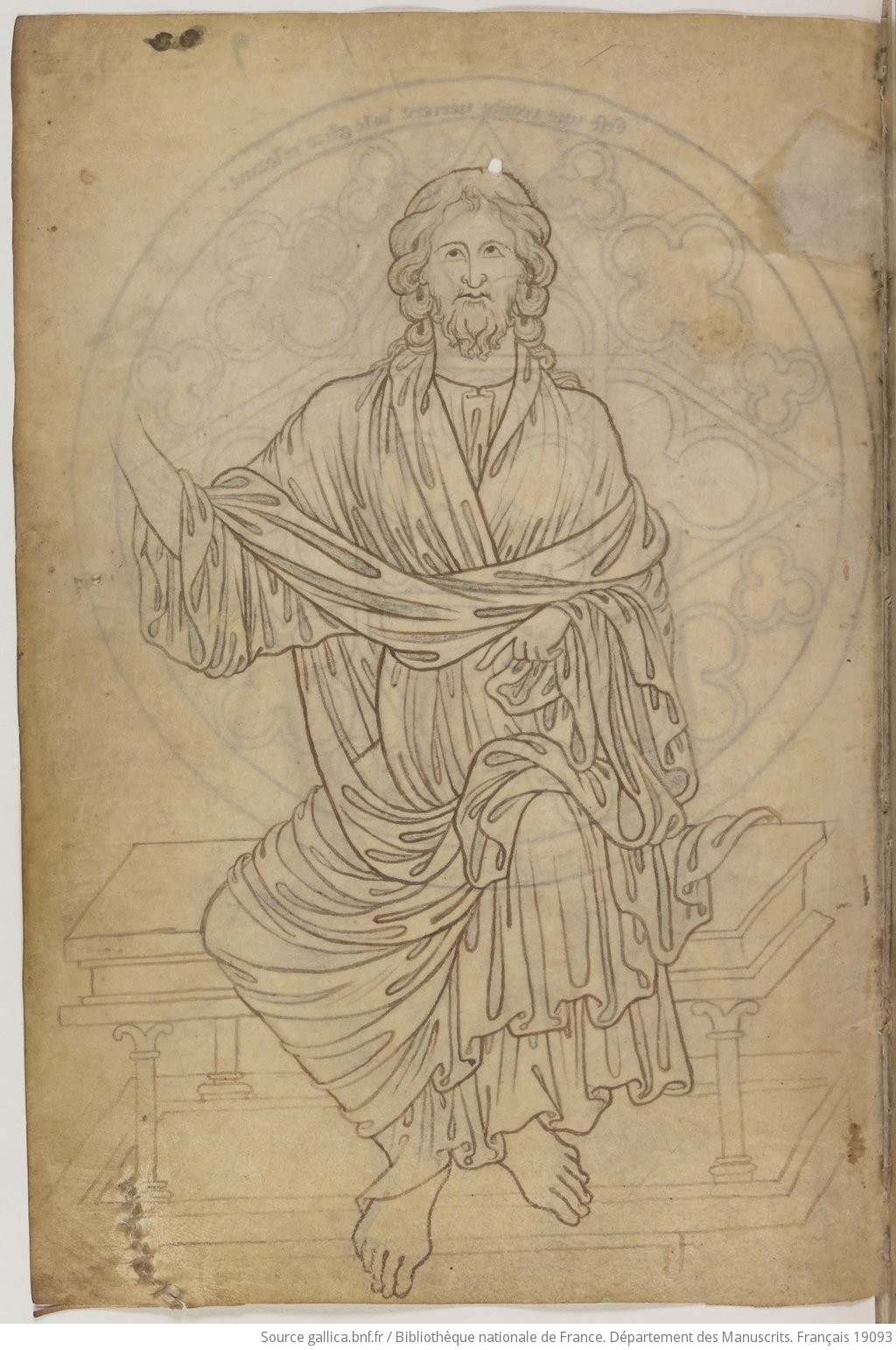
There is no question that not everyone could or would want to unite. But some progress would be nice. To take a historical example the Council of Chalcedon did result in a schism (Oriental Orthodox I think), yet even so, more Christians came out of that Council united than were united prior to it.