This is a bit off topic, but I'd love to hear more detail as to your home network setup. I've seen netboot.xyz before but I have no real knowledge as to how such a setup would work.
What I did was get up a server as DHCP server on the LAN, install tftpd on it and have netboot.xyz on it. Then for other machines (inside same LAN) that you want to boot something or install a distro, you would boot LAN, the dhcp server you set up will automatically let that other machine boot into netboot.xyz and then you can choose your distro.
It works really well for colocation server where you don't have the freedom to go there and plug in an Usb or a DVD because it's 1000km away in the footsteps of a hotspring in Iceland for example.
I have a Synology NAS running a TFTP server with the netboot.xyz payload, and I configured the DHCP server on my UDM Pro (https://store.ui.com/products/udm-pro) to announce the NAS's IP address as the netboot server.
Fantastic work by the Wine team! Congrats on the release.
Still very disappointed that macOS has not been supported since Catalina (10.15) dropped 32-bit support - from my understanding, the 32-bit architecture is deeply integrated into Wine and removing it would be a significant effort. Understandably the focus has always been on Linux, but I would still appreciate at least an update from the team on potential macOS support in the future.
A 64-bit-only Wine builds and works normally on Catalina and Big Sur. 32-bit support exists in CrossOver’s wine but is too much of a messy hack to merge upstream. There’s hope that an upstreamable solution will be found in the future though.
"This release is dedicated to the memory of Ken Thomases, who passed away just before Christmas at the age of 51. Ken was an incredibly brilliant developer, and the mastermind behind the macOS support in Wine. We all miss his skills, his patience, and his dark sense of humor."
I think focus on Linux is also reasonable because Apple refuse to support Vulkan. I don't think Wine developers should waste their time adding Metal support in addition.
Wine developers said in the past, that they were considering dropping macOS support altogether because of issues like that.
I agree, I don't think it would be productive for the Wine team to support Metal. I do wonder how feasible it would be for MoltenVK [0] to be supported instead.
It is surprisingly solid, I have tested multiple Windows games on M1 MacBook Air through Crossover and the only one that had issues was Outer Wilds - its engine (Unity) uses geometry shaders for GPU skinning and Metal has no support for those.
They could be emulated using compute shaders, but MoltenVK does not do this at the moment. Animations work properly inside Windows VM through Parallels, so I guess this is what their proprietary driver does.
Apart from that I played Witcher 3, Sekiro and Dark Souls through CrossOver with no issues and very solid performance on basically the weakest ARM Mac that will ever exist.
But I of course agree that Linux is much better option for gaming.
> I have tested multiple Windows games on M1 MacBook Air through Crossover
So you had x64 binaries calling a DX API that called a Vulkan API that called a Metal API all on top of a JIT translation layer to ARM on two month old hardware and it worked well?
I don't have a mac anymore, but a few months back I was using crossover on catalina, and can confirm that the DX11 translation works well. I can believe that even on Rosetta it'd still work surprisingly well.
These low level graphics API wrappers have so far proven to have very little overhead. Probably because metal, vulkan, and dx12 are a lot more similar than opengl and dx9 were.
There’s also the fact that they require a lot fewer function calls to perform the same work, so what overhead there is from each call doesn’t add up as much as it used to.
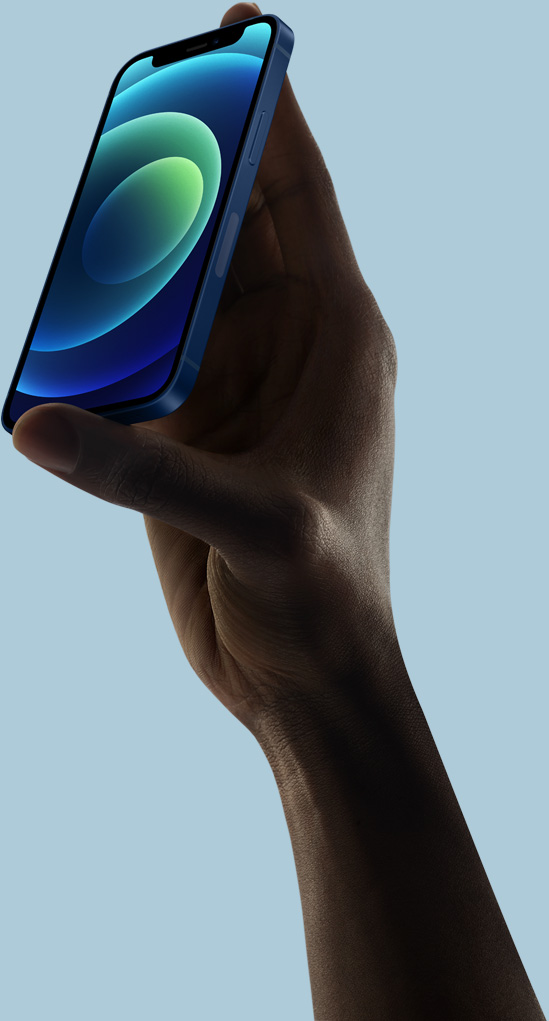
I feel like I'm going insane. On every single model revealed today, there is a differently-colored patch on the right side of the phone, below the power button. What is it?
It's not the SIM card slot - that's on the left side. It's not a new TouchID sensor - the website doesn't even mention it at all. And yet it exists in every single render.
I kept thinking it was the SIM card slot earlier in the presentation, but from what I've read on Reddit it sounds like it's part of the 5G antennae array.
Existing browser engines (Chromium, WebKit, Gecko) definitely have a lot of cruft in them for compatibility purposes. An engine designed to be much lighter weight and modern would be a great fit for embedding into applications.
As opposed to writing a new engine from scratch (Servo), I wonder how feasible it would be to fork one of these existing engines and modularize its contents? The ability to start from (close to) zero and then pick and choose which features you want in your engine would be pretty attractive to lots of developers. The application that never expects to play any sort of media or access any peripherals could exclude the respective components from the build entirely.
The Apple keynotes were created to present, and build hype around, something new. Some new product, or feature, or service, that would supposedly change the way an Apple user would interact with the world.
Of the announcements from this most recent keynote, what was new? The third camera on the iPhone? The update of the main series iPads to use the "Pro" look? A new screen in the Watch? A couple games and a tv show?
These keynotes stopped being relevant when Apple stopped producing anything keynote-worthy. They're just routine at this point.
Steve was also a lot more informal and relaxed. The current presenters just seem very "corporate excited" instead of actually enthusiastic about what they're working on.
The keynotes are relevant to those of us interested in updates to the Apple product line. They were created to hype Apple products, and they continue to be used for this purpose. That some people are not entertained is easily solved by those people not watching them.
Another big change post-Jobs has been the increase in information coming out of Apple and its suppliers prior to these press events. It used to be that we'd have a few rumors, but not a lot substantiated. Now, almost everything was known before the event, or was easily predicted. There were a few details which may not have been released prior, but nothing of significance. The camera, known. The sizes, predicted. Even the idea of "Pro" iPhones was out before the event.
What was actually new that wasn't anticipated, predicted, or leaked for this event? I think the 10.2" iPad may have been an unanticipated announcement. At least, it was not something I'd seen in articles I'd read prior to the event.
None of this is bad, but it changes the dynamic and energy of the press event. Whereas before it was about anticipation and discovery of the new things coming out, now it's just confirmation and filling in details. It's not interesting anymore. Maybe it doesn't need to be interesting, most of these things aren't. It's certainly not hurting Apple's sales for it to be more boring (the event) so long as people still buy their hardware and services.
I've been wondering what I will use once Inbox finally shuts down, and through the multiple discussions I've seen on HN I've never seen anybody even mention Boxy. This honestly looks like exactly what I've been looking for.